


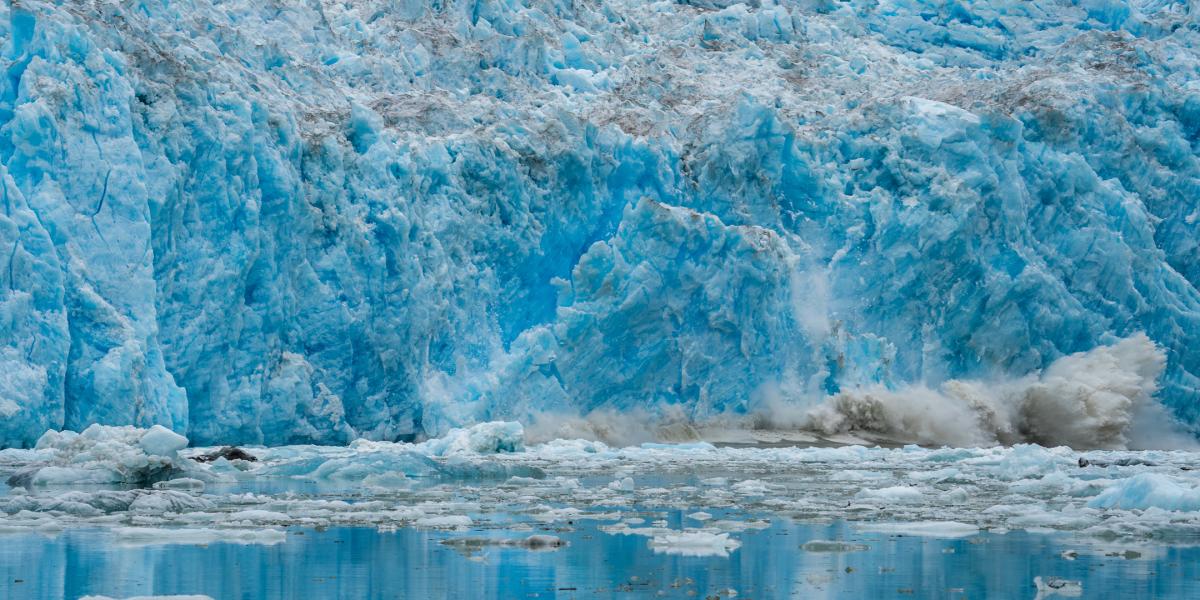
Glaciers to the Max
1,500 square miles of ice feeds 38 Juneau glaciers
North America's fifth largest icefield sits in Juneau's backyard, stretching across a 1,500-square-mile area that straddles the boundary between Alaska and Canada.
Mendenhall Glacier: Juneau's drive-up attraction
The Mendenhall Glacier is a river of ice stretching 12 miles from the Juneau Icefield to Mendenhall Lake. At its widest point, the glacier is more than a half mile wide, with ice 300 to 1,800 feet deep. The Mendenhall is one of 38 large and more than 100 smaller valley glaciers in the Juneau Icefield. The larger Taku, Eagle, and Herbert Glaciers are also nearby.
In 1879, naturalist John Muir named it "Auk Glacier" after a local Tlingit Indian village. In 1892, the name was changed to honor Thomas C. Mendenhall, superintendent of the U.S. Coast and Geodetic Survey. Since the mid-1700s, the glacier has been retreating. Before 1765, the face of the glacier reached 2.5 miles farther down the Mendenhall Valley.
Glacial ice has a unique crystalline structure that absorbs and reflects light, giving the ice its blue appearance. The most intense blue occurs in crevasses and when ice breaks off, or calves, from a glacier's face. The blue color fades as the ice is exposed to air and the crystalline structure breaks down. In Alaska, glacier viewing is often best on overcast and rainy days.
Commercial operators offer tours in the summer, including hiking, biking, rafting, canoe and kayak trips, and bus, van, taxi and shuttle tours. Thousands of visitors each year also take flightseeing tours by helicopter or fixed-wing planes. The U.S. Forest Service maintains several hiking trails near the Mendenhall Glacier Visitor Center, which provide a high-quality recreation experience emphasizing glacial phenomena, ecosystems, and the protection of fish and wildlife. The center is open 8 a.m. to 7:30 p.m. daily, May to September. Admission is $5 for adults and free for children under 16. Winter hours 10 a.m.-4 p.m. Thurs.-Sun.
Endicott Arm: Dramatic glacial fjord in Juneau's backyard
A trip to Endicott Arm is a 7.5-hour round-trip boat tour that takes you just south of Juneau. Located roughly 50 miles southeast of downtown Juneau, Endicott Arm is one of two stunning, glacially carved fjords that make up the Tracy Arm-Fords Terror Wilderness Area. Spanning over 30 miles long, this fjord offers a look at Southeast Alaska's rugged coastal ecology, featuring towering waterfalls, vibrant blue icebergs, and a chance to see Alaska's famous wildlife. At the head of the fjord lies the Dawes Glacier, a stunning tidewater glacier.
Glacier Bay: A National Treasure
Enter Glacier Bay, and you cruise along shorelines that were completely covered by ice about 200 years ago when George Vancouver first ventured into Icy Straits in 1794. As the weighty glaciers continue to recede, the land experiences a natural phenomenon known as isostatic rebound. The terrain rises about an inch per year, and fresh earth emerges along the shores.
A melange of marine mammals travel the area's waters. Along the shore and in the surrounding country you may spot bears, goats, moose, and a wide variety of birdlife.
Gustavus, the small community located at the mouth of Glacier Bay, is built on land uncovered by the glaciers. About 400 residents live there year-round, while the population swells to about 1,000 in the summer. Gustavus has a grocery store, restaurant, volunteer fire department, golf course, and a full range of visitor accommodations, from cabins and bed and breakfasts to hotels and luxurious lodges. Innkeepers can arrange guided sea excursions, including kayaking, whale-watching tours to Point Adolphus, or fishing in salt or fresh water. Hiking, birding, biking, diving, and flightseeing are also popular, as is visiting the Glacier Bay Lodge and Visitor Center.
Gustavus is located about 33 air miles from Juneau. Commuter air services provide year-round daily flights from Juneau. During the summer, Alaska Airlines provides daily jet service from Juneau.